
沒手機沒鐘表在一個洞穴里待40天是什么感覺?
沒有手機和時鐘,不見天日地在洞穴里熬40天是什么體驗?15人參與的這項終極隔絕實驗剛剛在法國結(jié)束,來看看參與者的親身感受吧。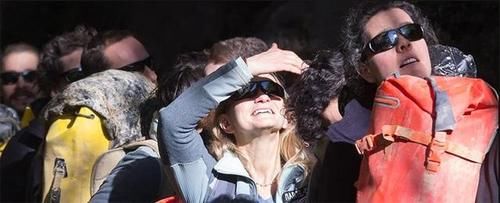
文章插圖
Volunteers leave the Lombrives cave on 24 April 2021. (Fred Scheiber/AFP)
Fifteen volunteers have emerged from a cave in the southwest of France after spending 40 days without clocks, phones, or sunlight for a human isolation experiment.
剛剛結(jié)束的一個與世隔絕實驗讓15名志愿者在法國西南部的一個洞穴里待了40天,沒有時鐘,沒有手機,也沒有光照。
The group of eight men and seven women lived in the Lombrives cave as part of a $1.4 million project called Deep Time, which set out to explore the limits of human adaptability to isolation. The project, led by the Human Adaption Institute, ended on Saturday after 40 days.
這次實驗是“深度時間”項目的一部分,讓8名男性和7名女性組成的團隊在隆布里夫斯洞穴中度過了40天。“深度時間”項目由法國人類適應(yīng)研究所發(fā)起,耗資140萬美元(約合人民幣908萬元),該項目旨在探知人類對與世隔絕環(huán)境的適應(yīng)力極限。實驗于上周六(4月24日)結(jié)束。
Social media footage from the day shows the smiling volunteers emerging from the cave to a round of applause while wearing special sunglasses to protect their eyes after so long in the dark.
實驗結(jié)束當(dāng)天的社交媒體視頻顯示,志愿者在一片掌聲中笑瞇瞇地從洞里出來了。為了保護長時間不見光的眼睛,志愿者都戴上了特制的太陽鏡。
During their time in the cave, the volunteers slept in tents and made their own electricity with a pedal bike since there was no natural light. They also drew water from a well 146 ft below the earth.
在洞中度過的日子里,志愿者們在帳篷中睡覺,用踏板自行車自己發(fā)電,因為洞中沒有自然光。他們還從地下146英尺(約45米)深的井里提水。
Since there was no sunlight, the team had to follow their biological clocks to know when to sleep, eat, or do daily tasks.
由于沒有日照,團隊必須根據(jù)各自的生物鐘決定何時睡覺、吃飯或干活。
To no one's surprise, they quickly lost their sense of time.
不出所料,他們很快就失去了對時間的感知。
Project director Christian Clot, who was also part of the group, told reporters Saturday: "And here we are! We just left after 40 days … For us, it was a real surprise," according to The Guardian.
據(jù)《衛(wèi)報》報道,項目負責(zé)人克里斯蒂安·克洛特上周六告訴采訪人員稱:“我們在這兒!40天后我們出來了……我們自己也很驚訝。”克洛特也是實驗團隊的一員。
One volunteer said he thought he had been underground for 23 days.
一名志愿者稱,他以為自己在地下待了23天。
The group had no communication with the outside world and was not able to use phones or other electronic devices.
在這期間,團隊沒有和外界溝通,也不能使用手機或其他電子設(shè)備。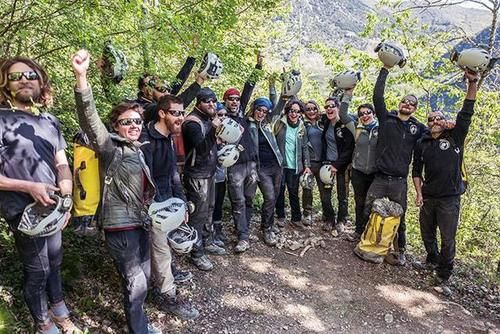
文章插圖
Volunteers celebrate after leaving the Lombrives cave. (Fred Scheiber/AFP)
One volunteer, math teacher Johan Francois, said he ran 10-kilometer circles in the cave to stay fit. He told reporters he had "visceral urges" to leave the cave, according to the BBC.
據(jù)BBC報道,志愿者之一、數(shù)學(xué)老師約翰·弗朗索瓦表示,為了保持身材,他在洞里堅持按10公里標準跑圈。他告訴采訪人員稱,他“迫不及待地”想出洞。
visceral [?v?s?r?l]: adj. 內(nèi)臟的;出于本能的;發(fā)自肺腑的
But other volunteers felt differently, with two-thirds saying they wanted to stay in the cave for longer.
但是其他志愿者卻有不同的感受,三分之二的志愿者表示還想在洞里多待一段時間。
"For once in our lives, it was as if we could press pause," Marina Lan?on, one of seven women to take part in the experiment, said, according to The Guardian. "For once in our lives, we had time and could stop to live and do our tasks. It was great."
據(jù)《衛(wèi)報》報道,參與實驗的七名女性之一瑪麗娜·蘭康說道:“人生中第一次,我們似乎按下了暫停鍵。我們有時間可以停下來生活,做自己的事。真的很棒。”
However, Lan?on did admit to feeling happy to be outdoors and hear birdsong again.
不過,蘭康也承認,重見天日,聽到鳥鳴,讓她感到很愉快。
French and Swiss scientists at the Human Adaption Institute monitored the volunteers closely during their time in the cave. They would regularly check the team's sleeping patterns, social interactions, and cognitive functions via sensors.
志愿者在洞穴內(nèi)的這段時間,人類適應(yīng)研究所的法國和瑞士科學(xué)家密切監(jiān)測了他們的活動。科學(xué)家會通過傳感器定期查看團隊的睡眠模式、社交互動和認知功能。
推薦閱讀


- 誠實 中國首位女宇航員,為何返回后就沒露面?原來一直在背后作奉獻
- 視點·觀察 在線教育被曝開始裁員潮 應(yīng)屆生:我壓根兒還沒入職呢!
- 無限挑戰(zhàn) 直接讓明星去坐牢?韓國這檔綜藝實在太猛,我們沒辦法模仿
- 楊超越 沒開播就翻車?《心動的信號4》陣容公開,楊超越被替換引不滿
- 東方紅一號 能量耗盡50年,東方紅一號衛(wèi)星為何還沒墜毀它還能再飛100年
- IT 接種仍被感染:新冠疫苗到底有沒有效?
- 宇宙 理論上宇宙應(yīng)存在大量文明,為何卻沒有文明聯(lián)系我們,原因是什么?
- 手機 酷派聲明將與快手聯(lián)合清查侵權(quán)行為
- 龔俊 《中餐廳5》來了!丁真加盟,爆紅男頂流當(dāng)廚師,但女嘉賓沒看頭
- 周也 姚安娜要上《中餐廳5》?丁真龔俊也來,黃曉明沒人管了